Nellie Bly: Ten Days Inside Blackwell’s Island Asylum
In September 1887 a twenty-three-year-old woman walked into the New York World with a story about immigrants.
Joseph Pulitzer’s editor had a different assignment. Get yourself committed to Blackwell’s Island Lunatic Asylum. Go in as a patient. Write what is behind the walls. Come back out alive.
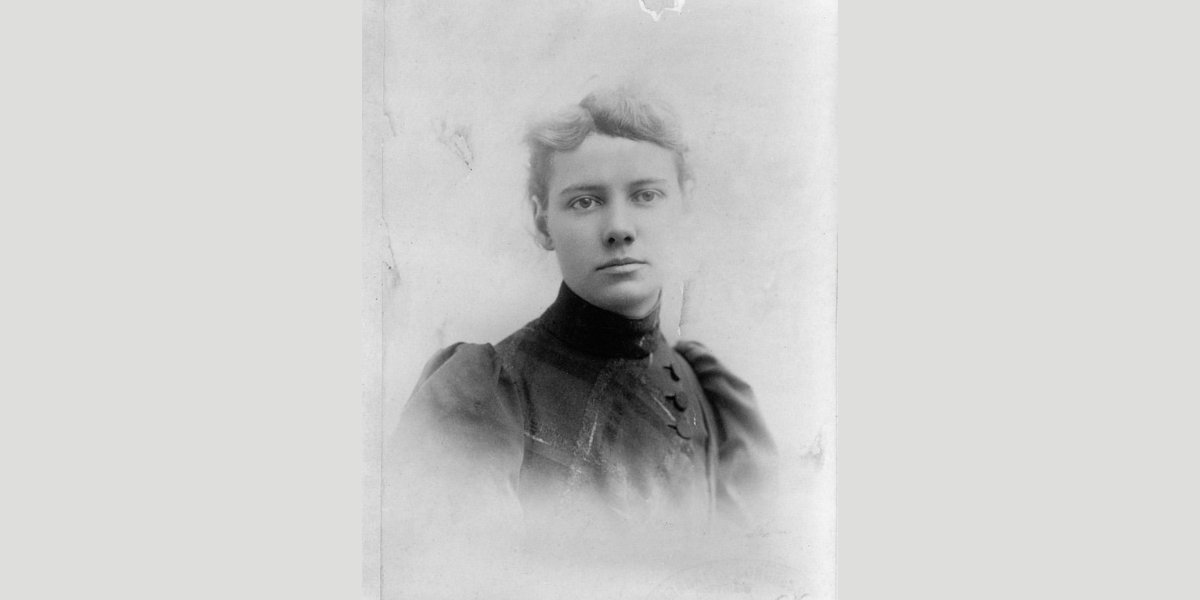
Elizabeth Jane Cochran — the name on the byline was Nellie Bly — paused, then said yes.
What she found in the next ten days shocked the city, forced a grand jury, and moved money the asylum had never been given. Within a generation almost nobody remembered the woman who did it.
Pink, then poverty
She was born May 5, 1864, in Cochran’s Mills, Pennsylvania, a town that existed largely because her father had built it. Judge Michael Cochran was a mill owner. Elizabeth was his favorite among fifteen children. She wore pink so often the family called her Pink.
In 1870, when she was six, he died without a will. Under Pennsylvania law the estate went mostly to children from an earlier marriage. The second wife and her children were left with almost nothing.
Comfort became poverty overnight. Her mother remarried. The stepfather was violent. Elizabeth watched her mother go to court and file for divorce on grounds of cruelty.
A woman fighting a system built by men. The child in that courtroom never forgot the room.
The column that hired her
She reached Pittsburgh in her late teens with almost no money and nowhere to put the ambition.
In January 1885 she read a Pittsburgh Dispatch column titled “What Girls Are Good For.” The argument was plain. Women belonged at home. Women who wanted work were a menace.
She wrote the editor a letter so exact and so angry that he printed a notice asking the anonymous writer to come in. She did. George Madden offered her a job.
Her first piece answered the column. She signed it Nellie Bly, borrowed from a Stephen Foster song, and she never published under Elizabeth Jane Cochran again.
By 1887 she was in New York with a proposal for Pulitzer’s World. The editor handed her the assignment she had already half-invented. She went home and practiced going mad.
The mirror, then the ferry
She stood in front of a mirror for hours, working the face that would convince trained doctors she had lost her reason.
She checked into a boarding house for working women under a false name. That night she refused to sleep. She stared until the other women were afraid. By morning the landlady called the police.
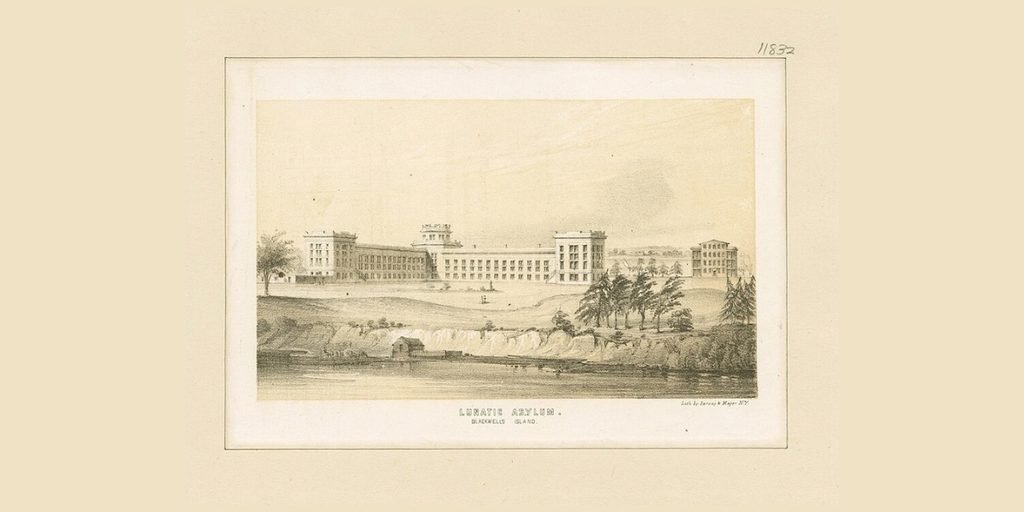
A judge found her incompetent. Bellevue’s insane pavilion examined her and called her undoubtedly insane. She was sent to Blackwell’s Island.
Not one professional in the chain caught the performance.
On the ferry she later wrote that the institution closed around her like a hand.
Sane was the symptom
The building was not the hospital in the public reports. Windows were broken. Wind came through onto the women sitting under them.
Women who had arrived with smaller troubles were put beside patients in severe crisis. No separation. No structure.
Then the detail that makes the rest land. Once inside, Bly acted normally. She answered clearly. She dropped the performance.
The staff wrote her normal behavior down as symptoms. When she asked to be released, that too was logged as proof.
The system had no door for a sane woman to prove she was sane. Every attempt at reason became evidence of unreason. She was held less by locks than by the logic of the place.
What she ate, and who could not speak
The nurses, in her account, were often crueler than the building. She wrote of patients struck for answering slowly, dragged by the hair, a face pressed into food.
She ate the meals and described them. Spoiled beef. Bread gone hard. Tea that was dirty warm water in a tin cup passed from patient to patient without a wash.
The baths stopped readers. Women were washed in sequence in the same cold water. It was not changed between them. They screamed. They begged. The routine did not change.
She wrote of foreign-born women committed in part because they did not speak English and could not answer an examination. They were not ill in the way the papers claimed. They were frightened and unable to make themselves understood.
They were on Blackwell’s Island, in the East River between Manhattan and Queens. Today the island is Roosevelt Island.
Anne Neville
She named a woman, Anne Neville, committed after a breakdown that followed illness and overwork. By Bly’s account she was rational.
What the asylum produced in that case, and in dozens like it, was not treatment. It was a file that made a frightened, poor, foreign, or inconvenient woman disappear.
Husbands committed wives. Families committed relatives they did not want to manage. Once inside, getting out was nearly as hard as proving you had never belonged there.
Watch the documentary
A page can hold the date she walked out. It cannot hold the ferry, or the notes she had to memorize because patients were not allowed paper.
The film from Old America Was Insane follows the ten days, the grand jury, and the name she borrowed from a song.
October 4
On October 4, 1887, a lawyer from the World secured her release. Ten days after she entered the system.
She walked out with the notes in her head. She sat down at the World and wrote.
The series ran that October and stopped the city. Names. Nurses. Practices. Patients described as people, not cases.
New York convened a grand jury. Bly went back to the island with them. By then the place had been scrubbed. Patients she had named were discharged or moved. Staff denied the account.
The jury sustained her anyway. The city’s Department of Public Charities and Corrections received a large increase — reported around $850,000, and in her own book she put the new appropriation at one million dollars more a year than before. Future commitment exams were supposed to be harder to pass. Anne Neville’s testimony was taken.
The changes were real. They were also not the end of the building.
Seventy-two days
Two years later she did a thing no woman traveling alone had done. In November 1889 she left New Jersey to circle the world faster than Phileas Fogg in Jules Verne’s novel.
Verne himself invited her to Amiens when the route crossed France.
She landed back in New Jersey on January 25, 1890. Seventy-two days, six hours, eleven minutes. The crowd at the station was so thick the train had trouble stopping.
For a season she was one of the most famous women in America.
Then the name thinned
In 1895 she married Robert Seaman, a manufacturer about forty years older. She left the paper to run the business.
He died in 1903. She found the managers had been stripping the company. A decade of lawsuits. She lost. Bankrupt in 1914.
She went back to reporting because it was what she knew. She covered the Eastern Front of the First World War from Austria. She returned to New York in 1919 and worked for the Evening Journal until pneumonia killed her on January 27, 1922. She was fifty-seven.
The Journal’s editor called her the best reporter in America. Within a few decades most people who knew the name knew it only as a blur.
What one investigation could not finish
The women she left on the island in October 1887 did not all feel the reforms. The asylum ran for decades after the series.
The money was real. The exams were supposed to be stricter. The conditions that filled the wards — poverty, a husband who wanted a wife gone, a language the doctor did not speak — outlasted one grand jury.
What she changed was real. What she could not change was also real. The gap between those two things is the honest size of one person against a system that had been failing people for a long time.
She was born Elizabeth Jane Cochran in a town named for her father. She signed a song, because 1887 would not print her under her own name. She practiced insanity in a mirror. She spent ten days in a place the city preferred not to picture. She came out with the story in her head.
The name most people remember, if they remember any of it, is not Elizabeth Jane Cochran.
Old America was insane.
More on Stories. Another woman the record tried to erase: Rosemary Kennedy. About.
Wrong date? oldamericainsane@gmail.com.
Sources
- Nellie Bly, Ten Days in a Mad-House (1887), including her own note on the million-dollar appropriation
- Ten Days in a Mad-House — overview
- Grand jury chapter, her account of the return visit
- Library of Congress portrait file, Nellie Bly / Elizabeth Cochrane