The Board in the Bed: How Colonial New England Courted
In the winter of 1770, colonial bundling meant a young man could walk five miles through Massachusetts snow to call on a daughter — and end the night in her bed.
Her parents did not always seat him by the fire until midnight. In many farmhouses they walked him to her room, watched the two of them climb under the same covers fully clothed, blew out the candle, and closed the door.
They slept. They had approved it. Families on that road did the same.
What sounds like a setup now was an ordinary Saturday night in parts of colonial New England for the better part of a century. The board in the bed, the sewn sack, the parents in the next room — none of it was a romance the way a novel means the word.
It was cold. It was a single fireplace. And when it failed, the parish book wrote the daughter’s name, not the system’s.
A practice with a name
They called the custom colonial bundling. Sometimes tarrying.
It came with immigrants from Wales and the Netherlands, people who had done it at home and saw no reason the ocean should end it. It spread fastest where winters were long and houses were one room: Pennsylvania Dutch country, rural New England. One fireplace. One or two beds. Everyone already sharing.
A suitor walking home in the dark across frozen fields was a risk. Sitting up all night burned wood and candles a farm could not spare. So parents made a calculation that had nothing to do with sentiment. The couple went into the bed, clothed. The parents went to sleep.
An 1811 dictionary recorded it without blushing: a man and a woman on the same bed with their clothes on, permitted by husbands and parents who had no spare bed. This was not a society that had forgotten its rules. It was a society that could not heat a second room.
The board and the sack
Parents were not naive. Rules existed.
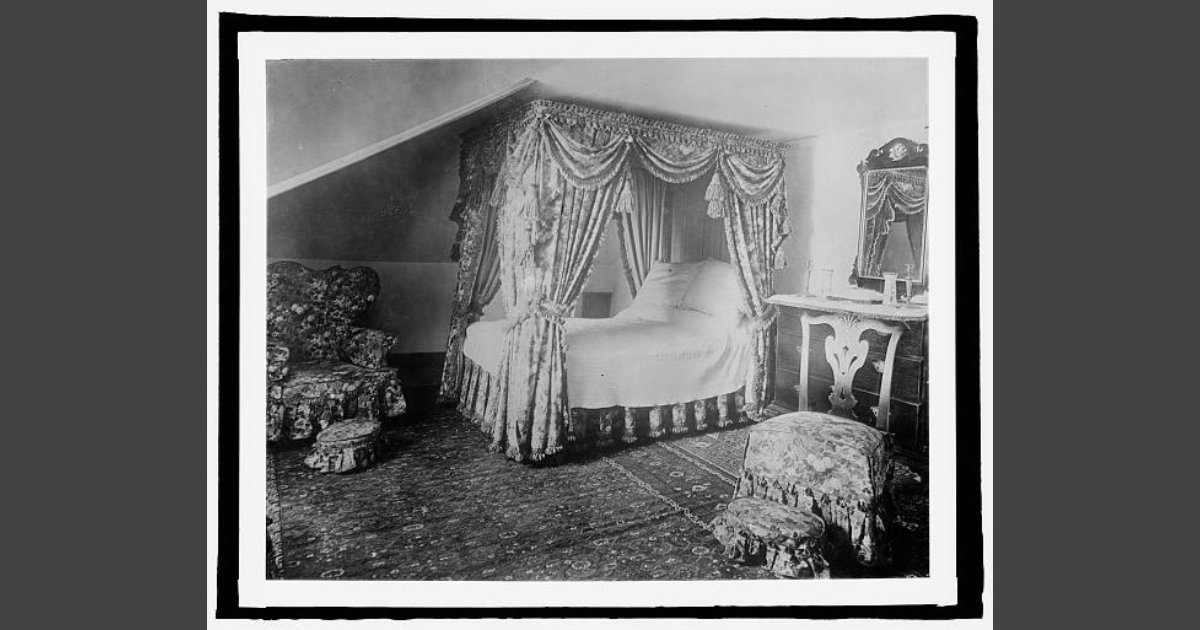
A bundling board — a thick plank — was sometimes laid down the center of the mattress. Sometimes the young woman was sewn into a bundling sack, a garment from the waist down, stitched shut at the bottom, one more barrier if everything else failed.
In Wales the arrangement had a name: caru yn y gwely. Loving in the bed.
An old New England grandfather, recorded by a local historical society, put the household math in one sentence. What is the use of sitting up all night, burning out fire and lights, when you can get under cover and keep warm? He said it about his own daughter. In that farmhouse he was not entirely wrong.
The courtroom behind the custom
The board and the sack were not the only reason parents agreed.
In the 1600s, when a woman became pregnant outside marriage, New England courts often took her word on the father. By the 1700s they wanted witnesses. A pregnancy that began in a barn or a field left her with little to prove and little to force a marriage.
A pregnancy that began in the family bed, with the mother and father on the other side of a thin wall, left a trail. Visits. A house. A pattern. Historians have argued that bundling let parents keep the suitor in view — so if the worst happened, there was someone to name and someone to pressure toward the altar.
They were not putting a daughter in bed with a man because they trusted him. They were keeping the courtship inside the house, where a later marriage could still be arranged.
One in three
The system failed often enough to show up in the books.
In the 1600s, fewer than one in ten New England brides was pregnant at the wedding. By the late 1700s, when bundling was most widespread, parish records in multiple towns put the figure at thirty to forty percent of first children born within nine months of the ceremony.
Researchers who went through those same books found the pattern ran in families. A mother with a premarital pregnancy made a daughter more likely to have one. The custom was handed down with the risk attached.
The board did not always hold. The sack did not always hold. The witnesses in the next room were asleep.
Watch the documentary
A page can name the board. It cannot show the single room, the one fire, the door closing.
The film from Old America Was Insane walks the custom the way the farmhouse lived it.
Graham v. Smith, 1846
Bundling was still common enough in rural New York in 1846 to enter a court record.
Graham v. Smith, Orange County. At the center was a nineteen-year-old woman who had bundled, in her own family’s home, in the way her parents had permitted. The case treated the custom as a living practice, not a memory. The judge told the jury that if a father had consented to or connived at the connection, he could not then collect damages for the loss of his daughter’s service and reputation.
The popular telling of the case preserves the county, the year, and the legal question. It does not preserve her name. Only the argument was considered worth keeping.
The sofa and the farmwomen
Preachers had been angry for decades. Jonathan Edwards condemned bundling. Ministers across New England called it a temptation no board could neutralize.
Around the middle of the century the cities moved. Boston, Salem, Newport — respectable families dropped the bed and put a sofa in the parlor. A couple could sit together under a parent’s eye without lying down.
Country mothers were not impressed. In 1776 a minister from a city parish preached against young men and maidens sharing beds. After the service a crowd of farmwomen stopped him in the churchyard.
Sir, they asked, do you think we and our daughters are naughty because we allow bundling?
He said they were leading themselves into temptation. They answered together. City folks, they said, send more children into the country without fathers than are ever born among us. Your sofa is more dangerous than our bed.
He had no reply. The sofa had no witnesses.
What actually ended it
Morality sermons did not kill the custom. The Second Great Awakening did more of the work.
From about 1800 a revival moved through rural America, filling churches and making a casual admission — that a daughter had bundled with the men on the road — harder to say in company. It did not vanish in a year. New York courts were still discussing it in the 1840s. Some Old Order communities kept versions into the twentieth century.
The mainstream decided the thing was embarrassing, and dropped it from the story Americans told about themselves. It became a footnote. A joke about primitive ancestors.
The nineteen-year-old in the Orange County courthouse, and the girls who never reached a courthouse, did not make that version.
The board was the appearance of protection
These parents were not monsters in the record. They were cold and poor, in a world where a daughter with a child and no husband could sink a household.
Bundling was their solution. Imperfect. Risky. Built on the quiet understanding that if it went wrong, she would be the one explaining herself.
The board was not protection. It was the look of protection. The difference shows up in the parish books of late eighteenth-century New England: roughly one in three brides walking to the altar already carrying what the board was supposed to prevent.
They built a system. They handed it down for a hundred years. The books recorded the numbers and almost never the names.
Old America was insane.
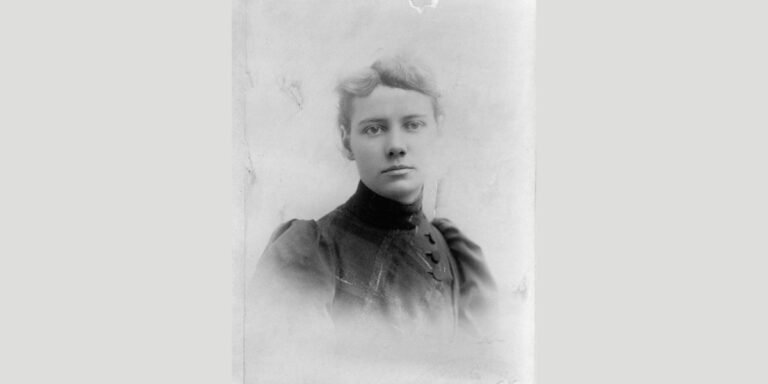
More on Stories. Another woman the record tried to shrink: Nellie Bly. About.
Wrong date? oldamericainsane@gmail.com.
Sources
- Henry Reed Stiles, Bundling: Its Origin, Progress and Decline in America (1871)
- Richard Godbeer and related work on New England courtship; bridal pregnancy rates of 30–40 percent in the late 1700s
- Graham v. Smith, New York Circuit Court, 1846 (1 Edm. Sel. Cas. 267)
- Samuel Peters on the sofa versus the bed; Jonathan Edwards’s condemnation