The Three-Hour Trial That Took Mary Todd Lincoln’s Freedom
On May 19, 1875, the widow of Abraham Lincoln was put on trial by her own son.
She was fifty-six years old. She had buried a husband and three sons. And she walked into a courtroom in downtown Chicago not as a guest of honor, but as the accused. The proceeding asked whether she should be declared insane. It lasted only three hours. By the end of that afternoon the jury said yes. She lost her freedom, she lost control of her money, and she almost lost her place in history.
How does a former First Lady end up in that room? And how did she win her freedom back?
Before the courtroom
To understand what happened in that courtroom, you first have to understand who Mary Todd Lincoln was before 1875.
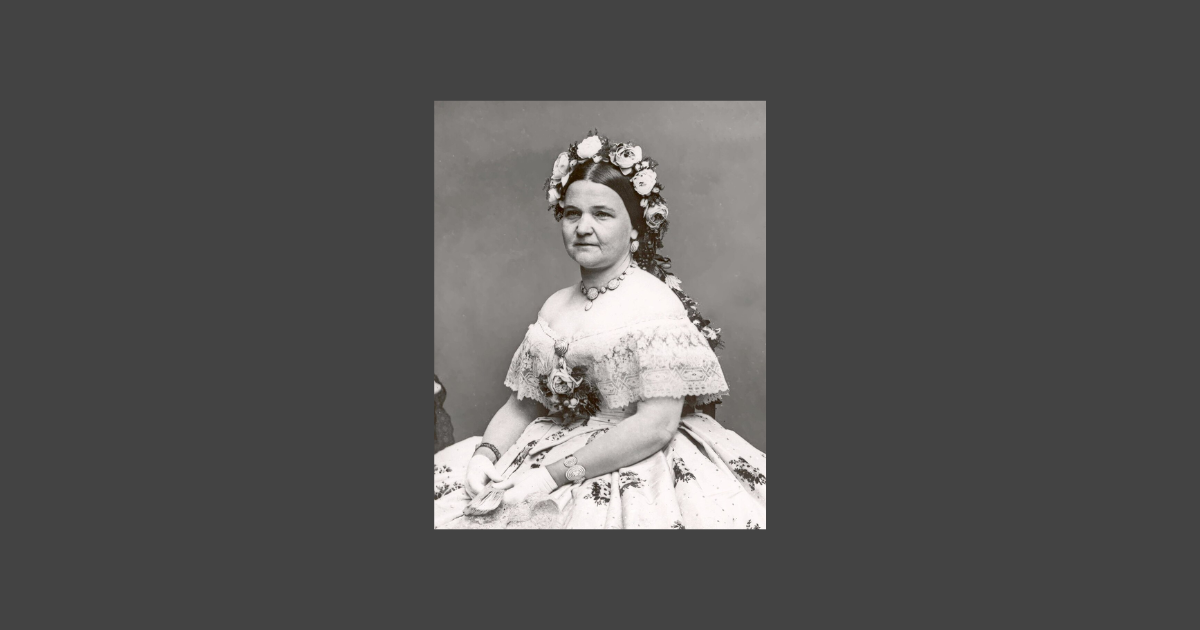
She was born on December 13, 1818, in Lexington, Kentucky, into a prominent political family. For a woman of her time and place she was unusually well educated. She read newspapers closely, she debated politics openly, and people who knew the Lincolns in Springfield and Washington said she understood power.
In 1861 she entered the White House as First Lady during a civil war. Some people in Washington praised her loyalty and intelligence. Others accused her of interfering in politics. Either way she was never a quiet background figure. She was visible, she was opinionated, and she was already a target.
The losses
Then came a series of losses that almost no one could survive.
Her son Eddie died in February 1850. He was not yet four years old. Her son Willie died of typhoid fever in the White House on February 20, 1862. He was eleven, and she was so overcome with grief that she could not attend his funeral. On April 14, 1865, she was sitting beside her husband at Ford’s Theatre when Abraham Lincoln was shot. She held his hand as he died the next morning. And in 1871 her beloved son Tad died at the age of eighteen.
By the early 1870s Mary Lincoln had buried a husband and three sons. Only one son was still alive: Robert Todd Lincoln, a successful lawyer in Chicago.
The widow’s life
Life as a widow brought a different kind of pain. At that time there was no automatic financial protection for presidential widows. Congress debated her pension for years, in public, while newspapers discussed her private life as if it was entertainment.
She spent money compulsively on clothes and goods she often never used. She met with spiritualists and photographers who claimed they could connect her with her dead sons. She carried large sums of cash and bonds with her because she was terrified of ending poor and homeless. All of those behaviors were described by witnesses. What those behaviors meant is exactly where the court in 1875 and history disagree.
The son and the petition
By 1875 her last living son had become deeply concerned. Robert Todd Lincoln was building his career as a lawyer in Chicago. He believed his mother was unsafe and unable to manage her money. He hired people to observe her in hotels and stores. He collected hotel bills, store accounts, and statements from doctors and clerks.
From his point of view the public record suggests he thought he was preventing a tragedy. From her point of view her adult son was gathering evidence against her. What Robert believed in his heart is not fully recorded. We only know what he did next. He asked a court in Cook County, Illinois to examine his mother and decide if she should be placed under guardianship.
Three hours
The proceeding took place on May 19, 1875, in Chicago. What follows comes from court records and letters from that time.
Doctors, hotel clerks, shopkeepers, and Robert himself gave testimony about her spending, her fears, and her behavior. Mary did not have a lawyer of her own speaking for her in that room. Under Illinois law at that time the accused was not provided counsel, and a jury could decide the question based on testimony about behavior and reputation.
After about three hours the jury declared her to be insane. About a month later Robert was given legal control over her property and money. That was the legal reality. One short hearing had taken away the independence of a fifty-six-year-old woman.
Watch the documentary
A page can name the courtroom and the sanitarium. It cannot show the letters she wrote from inside or the moment the second jury reversed the first.
The film from Old America Was Insane follows the three-hour trial, the confinement, and the campaign that won her freedom back.
Bellevue Place
She was taken to Bellevue Place, a quiet private sanitarium outside Chicago. It is important to be clear here, because rumors have added details that are not in the record. The record does not show that she was chained, beaten, or drugged there. The rooms were comfortable and the treatment was restrained for that period.
The pain described in her own letters was different. She was a widow who had lost almost her entire family, and now she was being held by law in a place she did not choose, placed there through the action of her last living son. And she knew exactly what had happened. From inside Bellevue she began writing letter after letter, insisting that she was capable of managing herself and her affairs.
The campaign from inside
The woman the jury had called incompetent then ran a remarkable campaign from inside confinement.
She wrote to lawyers, to friends, and to editors. One of the most important people to receive those letters was Myra Bradwell, who had founded the Chicago Legal News in 1868 and was one of the first women admitted to legal work in America. Bradwell published Mary’s letters and criticized a law that allowed a woman to lose everything without a lawyer to defend her.
Mary demanded attorneys, she demanded access to her property, and she demanded a new hearing. The same woman who had been declared unable to handle her life was organizing legal help and press attention with complete clarity.
The bonds and the second jury
In September 1875 she was released from Bellevue into the custody of her sister, Elizabeth Edwards, in Springfield, Illinois.
Then came the detail that undid the entire case against her. When her clothing was examined, it was found that she had about fifty-six thousand dollars in government bonds and securities carefully sewn into her petticoats and pockets. It was a fortune at the time. A woman accused of being unable to understand money had quietly protected a fortune through months of confinement and travel.
The following June, in 1876, a second jury in Illinois heard her case and declared her restored to reason. That was the legal end. Her rights and her property were returned to her.
What followed
Her case did not end with her. In the years that followed, Illinois changed its commitment laws to give accused persons stronger legal protection, including better notice and the right to counsel. Historians connect that reform in part to the public outrage over her trial.
Mary spent time in Europe, lived quietly, and in 1880 returned to Springfield to live with her sister. Her health declined, and she died on July 16, 1882, at the age of sixty-three, in the house where she had married Abraham Lincoln forty years earlier. Robert lived until 1926. He rarely spoke in public about what he had done, and much of his private correspondence from that period is missing.
Who was protecting whom
So who was protecting who in that Chicago courtroom?
Was this a son trying to save a grieving mother he believed was in danger, or was it a legal system that allowed grief, fear, and unusual behavior to be relabeled as madness after only three hours of testimony? The first jury gave one answer. The second jury gave another.
What remains is the record of a woman who buried almost everyone she loved, lost her freedom to a law that gave her no lawyer, and won it back with letters, allies, and proof that she could protect her own future.
Old America was insane.
More on Stories. Another place the law failed the person it was meant to protect: Nellie Bly. About.
Wrong date? oldamericainsane@gmail.com.
Sources
- Cook County court records, May 19, 1875
- Contemporary letters of Mary Todd Lincoln and Myra Bradwell
- Jason Emerson, Mary Lincoln’s Insanity Case: A Documentary History
- Mary Todd Lincoln